Let’s talk about one of the most common (and most important) questions we get from clients —
Are there any hidden costs in building a home?
It’s a fair concern. You’ve likely heard the horror stories: surprise expenses, blown budgets, and change orders that seem to come out of nowhere. That’s not how we do things at Trawick Homes. So let’s break it down together.
Table of Contents
Why we build on a budget-based contract — and why that protects you
Most builders sell a “fixed price.” It sounds reassuring up front, but here’s what often hides behind it: vague allowances and interior selections left undecided until you’re deep into the build. That’s where the surprise costs pile up — and by then, you’re stuck.
We do it differently. At Trawick Homes, you build on a budget-based contract, which means your real numbers are on the table from the start and stay visible the whole way through.
Here’s what that looks like:
✔️ We map out all known costs upfront — from infrastructure and layout to the finishes that turn a house into your home.
✔️ Your selections drive the pricing. We take time on the front end to clarify your vision before the first wall ever goes up.
✔️ If a selection isn’t finalized yet (because let’s be honest, picking everything on Day 1 isn’t realistic), you’ll get a thoughtful, detailed allowance based on your preferences — not a generic placeholder.
A budget-based contract isn’t less certainty. It’s honest certainty — the kind you can actually plan your life around.
So where do the “hidden” costs usually come from?
Great question. The truth is, the biggest budget breakers don’t usually come from the builder — they come from changes made after the plan is agreed on.
We’re talking about things like:
- Modifying the floor plan midway
- Choosing major upgrades after the foundation’s poured
- Swapping out finish packages that cost more than originally planned
Can you make changes if your vision evolves? Of course. But we’ll always hit pause to check how a decision impacts the budget so you know what it means before you say yes.
That’s why we’re upfront about the numbers and proactive in our planning process. We don’t avoid hard conversations — we welcome them early to save everyone stress later.
The 5 costs people forget to budget for
When people picture the cost of a home, they picture the house — the square footage, the kitchen, the finishes. What catches them off guard is everything that happens before and around the build. None of these have to be a surprise. They just have to be named early, which is exactly what an honest budget review is for.
1. Site prep and land clearing
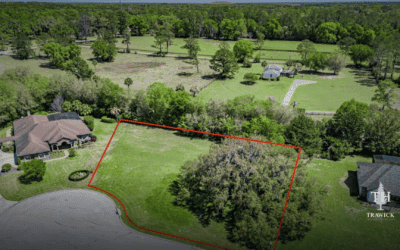
Before a single wall goes up, your lot has to be ready to build on. That can mean clearing trees, removing brush, hauling off debris, and creating access for equipment. A flat, cleared lot is inexpensive to prep. A wooded or sloped one takes more. We walk the lot with you up front so this is a known number, not a first-week shock.
2. Soil testing and grading
What’s under your home matters as much as what’s on top of it. Soil conditions determine how the ground has to be graded and how your foundation is engineered. Some lots need extra fill, compaction, or drainage work to build safely. We’d rather find this out with a soil test on the front end than discover it after the concrete is ordered.
3. Utility hookups and connections
Getting water, sewer, electric, and gas to your home isn’t automatic — and it’s one of the most commonly forgotten line items. If you’re on a lot inside city limits, you’re connecting to existing services. If you’re further out, you may be looking at a well, a septic system, or running utilities a longer distance. Every one of those carries a different cost, and we map it to your specific lot, not a generic average.
4. Permits, impact, and inspection fees
Every build comes with permits and inspections, and depending on your jurisdiction, impact or connection fees as well. They’re rarely huge, but they’re real, and they belong in the budget from day one instead of arriving as a line item you didn’t plan for.
5. Finish-selection creep
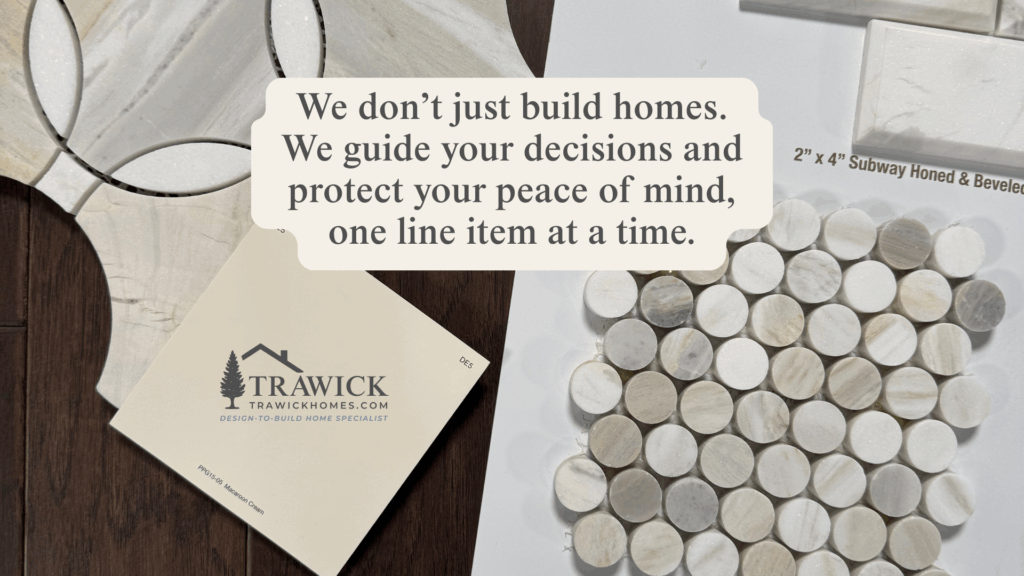
This is the big one — and the most fun to spend on. You start with a beautiful, on-budget plan. Then you fall in love with the upgraded tile, the better cabinets, the quartz instead of laminate. Individually, each choice feels small. Together, they’re where most over-budget stories actually come from. We give you detailed, realistic allowances for every selection, so you can see the cost of an upgrade before you fall in love with it — not after.
The pattern in all five: the cost itself isn’t hidden. It’s just often left unsaid until it’s too late to plan for. We say it early, on purpose.
Your lot has a bigger say in your budget than you’d think
Two identical floor plans can cost very different amounts to build — because they’re going on two different pieces of land. If you already own your lot, or you’re shopping for one, these are the factors that move the number:
- City utilities vs. well and septic — connecting to existing services costs differently than installing your own.
- Slope and access — a flat, easy-to-reach lot is cheaper to prep than a steep or tucked-away one.
- Soil and drainage — the ground conditions shape your foundation and grading work.
- Distance and clearing — wooded lots and longer utility runs add prep cost before the build begins.
This is why a lot walk is part of our process from the start. Before you commit to a piece of land, we can help you understand what it will actually take to build on it. Already own your land? Here’s how we build on it.
How much should you set aside for the unexpected?
A common rule of thumb is to keep a contingency — a buffer of roughly 5–10% of your build budget — for the things no one can fully predict. It’s smart planning, and we always recommend it.
Here’s the difference in how we work, though: we don’t wait for that buffer to quietly disappear. We flag a potential overage when it’s still $2,000, not after it’s become $20,000. The goal isn’t to use your contingency — it’s to make sure you finish your home knowing you still have it.
Hidden cost of building a home: your questions, answered
What is the most commonly forgotten cost when building a house?
Utility hookups and site prep. People budget carefully for the house itself and forget what it takes to get the lot ready and connected — clearing, grading, and bringing water, sewer, and power to the home. We name these costs up front so they’re never a surprise.
Is site prep included in the price of my home?
It depends on your lot, which is why we walk it with you before we ever talk final numbers. A flat, cleared, utility-ready lot needs very little prep. A wooded, sloped, or rural lot needs more. Either way, we put it in your budget from the beginning rather than treating it as an extra.
Will my price change after I sign?
Only if your selections change. We build your budget around the choices you make on the front end, with detailed allowances for anything still being finalized. If you decide to upgrade something later, we pause and show you the new cost before any work moves forward — so the decision is always yours, with the number in front of you.
Are utility hookups included in a custom home build?
They’re part of your overall budget, but the cost varies by lot. A home inside city limits connects to existing services. A rural lot may need a well, a septic system, or longer utility runs. We price this to your specific property instead of using a one-size-fits-all estimate.
Does building on my own land cost more?
Not necessarily — it just depends on the land. Owning your lot can save you money, but the build cost is shaped by the lot’s slope, access, soil, and utilities. A quick lot evaluation tells you what to expect before you’re committed.
How much should I budget for surprises?
We recommend keeping a contingency of about 5–10% of your build budget. With our budget reviews flagging costs early, most of our homeowners finish with that buffer still intact.
See your numbers before you fall in love with a floor plan
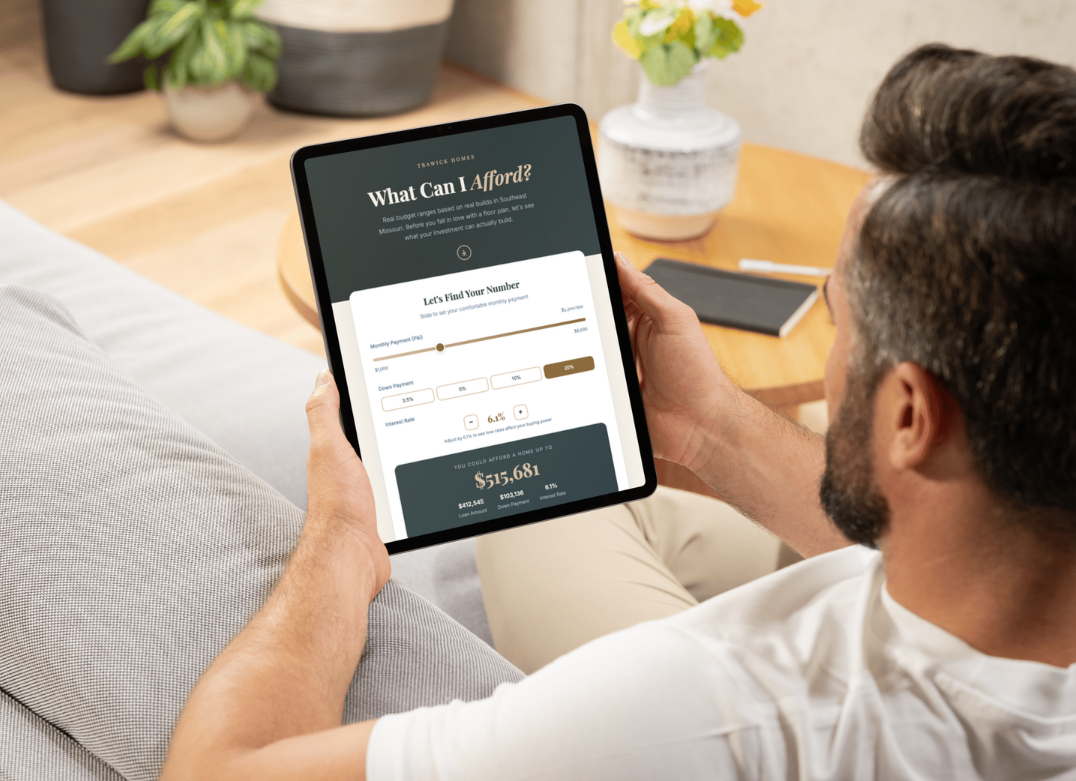
The fastest way to take the mystery out of building is to start with a real number. Our Affordability Calculator gives you a grounded starting point in minutes — no pressure, no sales pitch.
When you’re ready to talk specifics, book a free planning call. We’ll help you understand the budget, the build, and every step in between — for your lot, in your market, here in Southeast Missouri or Ocala, FL.
Budget transparency isn’t a phrase — it’s a method
Want to avoid unexpected expenses when building? Here’s how we keep your project financially clear, from start to finish:
- Selections are made up front whenever possible — no guesswork
- Detailed allowances are created if things are still being finalized
- Every change order includes the new price of the home — not just a single line item
- We call it out when we see a risk of going over — even if it’s just $2K here, $5K there
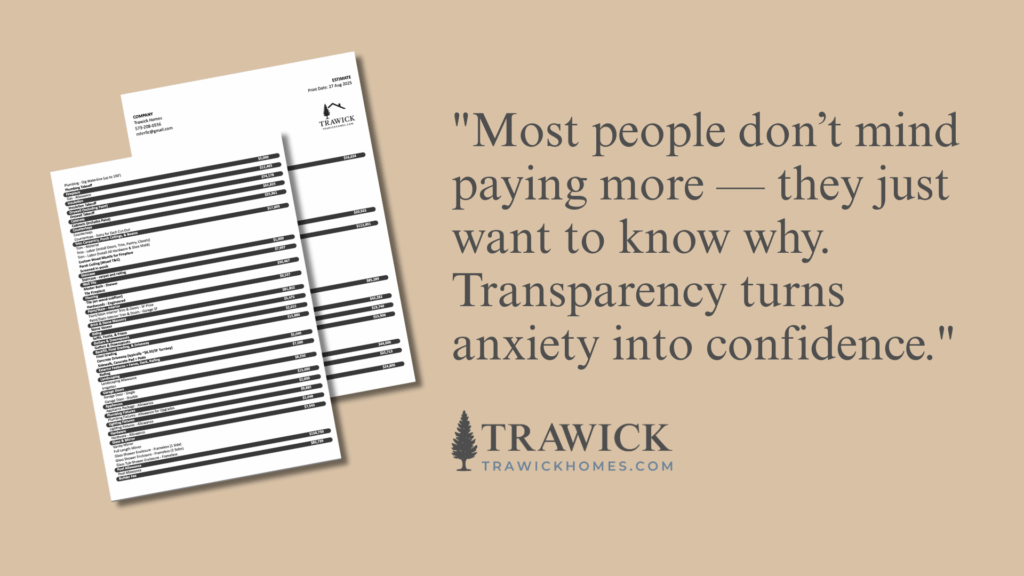
Because too often, little changes add up. Before you know it, you’re $70,000 over budget and wondering how you got there. We’d rather have the hard conversations at $2,000 instead.
You deserve to feel confident in your investment
Your home is a huge milestone — emotionally and financially. It’s not just walls and windows. It’s the place you’ll create memories, raise your family, or slow down in your next chapter.
That’s why we take our job seriously — and personally.
At Trawick Homes, we build more than houses. We build experiences worth having and homes you’re proud to live in. And that starts by being clear and honest with your budget.
Not sure where to start? Let’s talk costs of building a custom home.
If you’re dreaming of building, and want a process where you actually know what you’re stepping into —
Let’s sit down. No pushy sales pitch. Just a conversation to help you find your footing.
📞 Give us a call CONTACT US AT +1 573-722-2402 or visit trawickhomes.com to schedule your free consultation.
We’ll help you understand the budget, the build, and every step in between.
Because building your custom home shouldn’t feel uncertain. It should feel like coming home — from the very beginning.