Paint is supposed to be the easy decision.
You’ve survived the floor plan. You’ve picked cabinets, countertops, and a roof color. Then someone hands you a fan deck with 3,000 chips on it and asks which white you’d like — and suddenly the easiest decision in the house is the one keeping you up at night.
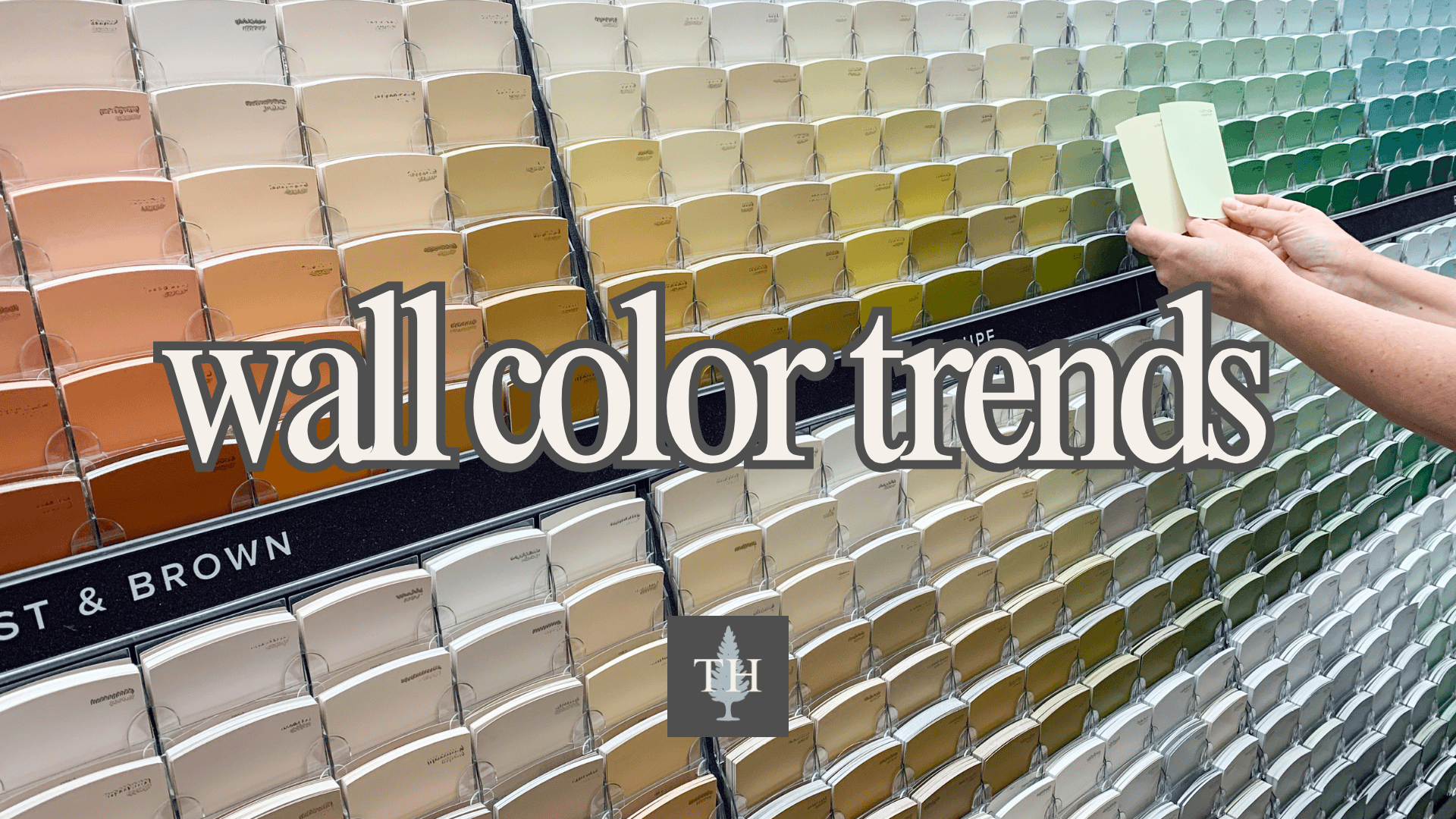
Here’s the good news: the 2026 wall color trends are actually making this simpler, not harder. The industry is moving in one clear direction — away from cool, safe, and slightly sterile, and toward warm, grounded, and lived-in. Once you understand that shift, the fan deck stops feeling like a test and starts feeling like a filter.
Below is what our design team is steering families away from this year, what we’re choosing instead, and how to pick colors you’ll still love in ten years — not just ten months.
Table of Contents
The Paint Colors Going Out of Style in 2026
None of these are “bad” colors. They’re just colors that have been doing the same job for a decade, and the room has moved on. Here’s where designers are calling time.
Cool, Safe Gray
Gray had a long, useful run. It was the color you chose when you didn’t want to choose — safe, resale-friendly, impossible to get wrong.
That’s exactly the problem now. Designer Lauren Saab told Homes & Gardens that cool gray “is starting to feel dated,” with many icy gray tones now reading as “flat and impersonal.” In a brand-new home, cool gray can undercut everything you spent money on — it fights warm white oak floors, it dulls brass and bronze hardware, and it reads as sterile against natural stone.
If you’re building, this matters more than it does in a repaint. Your wall color sits next to permanent finishes for the life of the home.
Muted, Gray-Toned Sage Green
Sage was the calm, restorative green everyone reached for post-2020. It did its job. But the gray-toned, desaturated version of it is losing steam fast.
As Tash Bradley of Lick put it, color trends are “emotional reflections of where we are culturally” — and we’re seeing a real shift away from restrained, washed-out palettes. Sage isn’t disappearing so much as getting turned up: same family, more pigment, more personality.
Stark, Sterile White
There’s a collective fatigue with all-white walls. Designer Betsy Wentz described the issue plainly: white “often feels cold, sterile, and lacking soul.”
Builder magazine’s 2026 trend roundup found the same thing across major national builders — Ashton Woods flatly stated they’re “skipping all white walls” in favor of earthier tones. In a home with big windows and high ceilings (which describes most of what we build), stark white can make a beautiful great room feel like a waiting area.
Warm white is a different story. That’s still very much in. The distinction is undertone, not brightness.
Flat, “Sad” Beige
The internet named this one, and it stuck. Sad beige is neutral without intention — a commitment-free color chosen to avoid a decision rather than make one.
Designer Jennifer Baxter’s read is that homeowners have “stopped finding neutrality reassuring.” A neutral still works beautifully. It just needs an undertone doing something on purpose.
What’s Replacing Them: Warmer, Richer, More Grounded
Every one of the fading colors is being replaced by something in the same family — just with more depth and more warmth. That’s the whole story of the 2026 wall color trends in one sentence.
Here’s what we’re putting in front of clients this year:
- Warm neutrals — soft mushroom, muted taupe, and warm greige. These are the direct replacements for cool gray, and they play beautifully with the wood tones and natural stone we use constantly.
- Richer, more saturated greens — deep olive, muddy botanical tones, and chartreuse as an accent. Green isn’t leaving; it’s getting a backbone.
- Color-washed softer hues — smoky jade and soft lavender deliver the calm people wanted from sage, without the flatness.
- Earthy minerals — terracotta, clay pink, and chalky blue-green. Grounded, tactile colors that feel connected to the outdoors.
- Coffee-inspired neutrals — mocha, latte, and espresso, plus soft tans and taupes. Per PulteGroup’s 2026 design research reported by Builder, these are anchoring new-construction palettes nationally, alongside bold blues and dimensional greens in rooms built around rest and wellness.
Notice what all five have in common: warmth and dimension. Colors that shift slightly as the light moves through the day, instead of sitting flat on the wall from morning to night.
The 2026 Colors of the Year Tell the Same Story
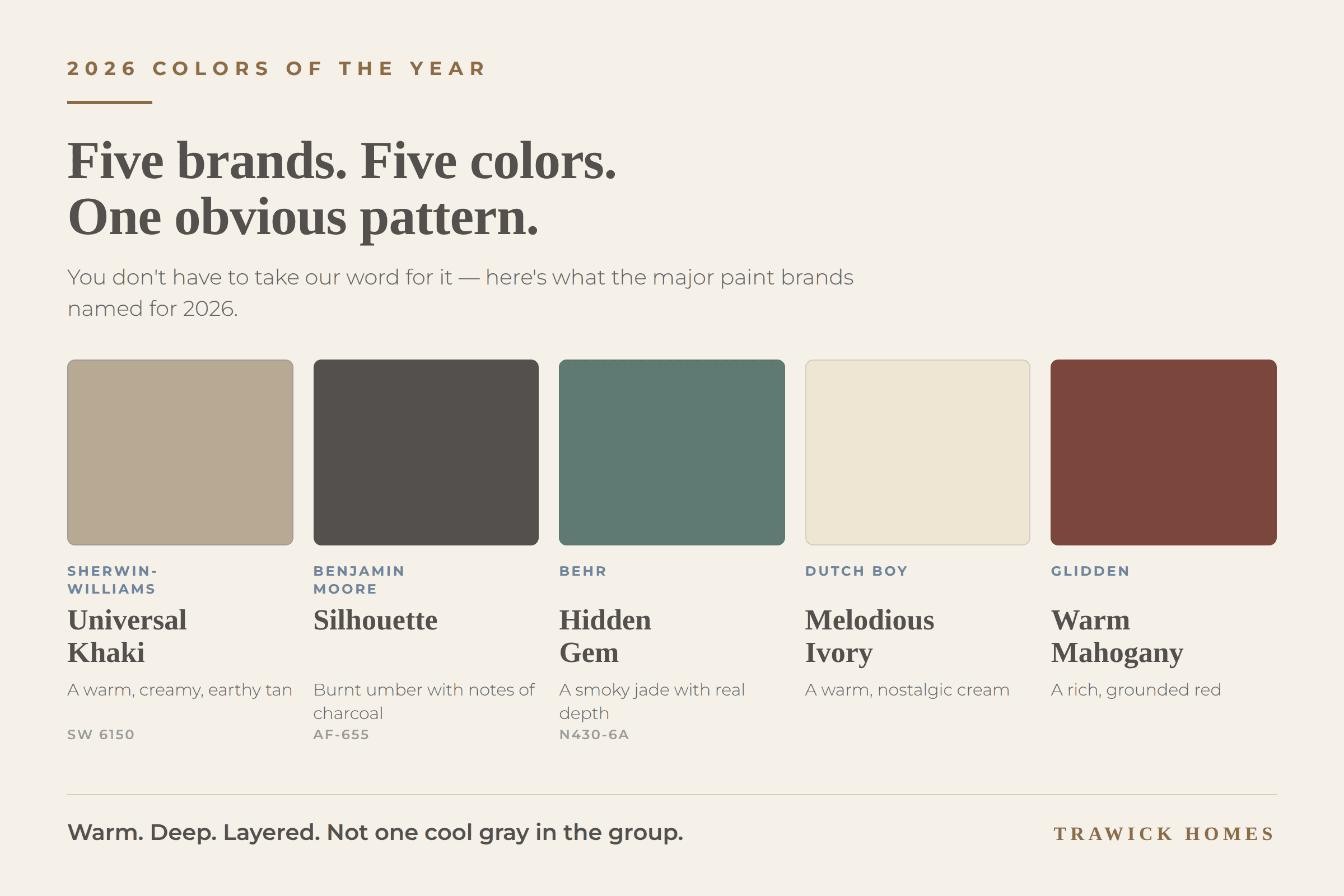
You don’t have to take our word for it. Look at what the major paint brands named for 2026:
- Sherwin-Williams — Universal Khaki: a warm, creamy, earthy tan
- Benjamin Moore — Silhouette AF-655: burnt umber with notes of charcoal
- Behr — Hidden Gem: a smoky jade with real depth
- Dutch Boy — Melodious Ivory: a warm, nostalgic cream
- Glidden — Warm Mahogany: a rich, grounded red
Five brands, five different colors, one obvious pattern. Warm. Deep. Layered. Not one cool gray in the group.
How to Choose Wall Colors You’ll Still Love in Ten Years
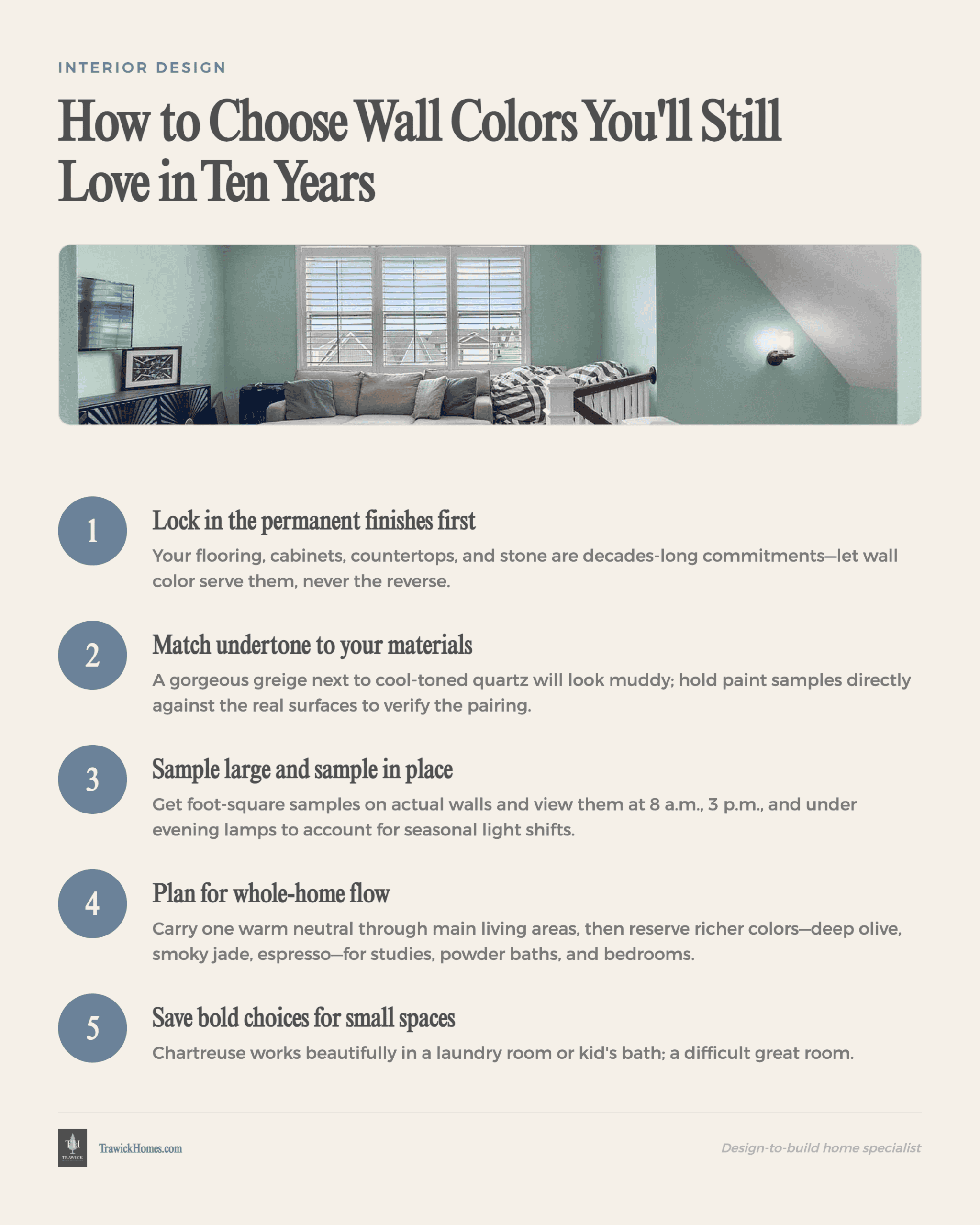
Trends are useful as a direction, not a directive. You’re building a home you plan to be in for a long time, and the goal isn’t a house that looks like 2026 forever. Here’s how we coach families through it.
Start with what you can’t change. Your flooring, cabinets, countertops, stone, and roof are locked in for decades. Paint is the least expensive thing in the house to change later. Pick the permanent finishes first, then let the wall color serve them — never the reverse.
Match the undertone, not the color. This is where most color regret actually comes from. A gorgeous greige next to a cool-toned quartz will look muddy, and it won’t be obvious on a two-inch chip. Hold your samples directly against the real materials.
Sample big, and sample in place. Get large samples on the actual walls — at least a foot square — and look at them at 8 a.m., at 3 p.m., and under your lamps at night. Southeast Missouri gets genuinely different light across the seasons, and a north-facing room will pull color in a direction a south-facing one won’t.
Think in whole-home flow. Pick one warm neutral to carry the main living areas, then use the richer colors — deep olive, smoky jade, espresso — where they’ll earn their keep: a study, a powder bath, a primary bedroom, a butler’s pantry.
Save the boldest choices for the smallest commitment. Chartreuse is a wonderful accent and a difficult great room. The same goes for terracotta and clay pink — stunning in a laundry room or a kid’s bath, a bigger swing across 400 square feet of open wall.
Where Wall Color Fits in a Custom Build
One thing that surprises a lot of first-time builders: paint comes late. Cabinets, trim, paint, and flooring all land in the final stages of construction, which means you have more time than you think to get this right.
It also means the decision doesn’t happen in a vacuum. By the time we’re talking wall color, you’ve already made dozens of selections that narrow the field for you — and that’s a relief, not a limitation. Half the paralysis people feel at the fan deck comes from thinking they’re choosing from 3,000 options when they’re realistically choosing from about six.
If you’re building on your own land in Cape Girardeau, Jackson, or anywhere across Southeast Missouri, you’ll walk through selections with our team rather than being handed a catalog and a deadline. Our nine-step build process puts design support in front of you at every milestone — and every selection is reviewed against your budget-based contract before it’s final, so a color you love never turns into an invoice you didn’t see coming.
And if you’d rather skip selections altogether, our move-in-ready homes are designed with these same warm, layered palettes already in place. Different path, same standard of craftsmanship.
Frequently Asked Questions
What are the biggest 2026 wall color trends for new construction homes?
What are the biggest 2026 wall color trends for new construction homes?
The clearest trend is a move from cool tones to warm ones. Warm neutrals like mushroom, taupe, and warm greige are replacing cool gray, while richer greens, earthy minerals like terracotta and clay pink, and coffee-inspired neutrals such as mocha and espresso are showing up across national builder palettes for 2026.
Is gray really out of style in 2026?
Cool, icy grays are fading — designers describe them as flat and impersonal, especially against the warm wood and natural stone common in new builds. Warm greige, which bridges gray and beige with a brown undertone, is very much still in play. The issue is undertone, not the gray family itself.
Are white walls still a good choice?
Warm whites are still an excellent choice. Stark, cool, sterile whites are what designers are moving away from. If you love a bright home, look for a white with a soft cream or greige undertone rather than a blue or gray one.
When do I pick paint colors during a custom home build?
Paint typically comes in the final stages, after cabinets and trim and alongside flooring. You’ll have made most of your permanent selections by then, which actually makes the color decision easier — your fixed finishes narrow the realistic options considerably.
How much does wall color affect resale value?
Paint is the least expensive finish in the house to change, so it carries far less resale weight than flooring, cabinetry, or countertops. That’s freeing: choose the color you actually want to live with, and put your resale energy into the permanent finishes.
Pick the Colors You’ll Actually Live In
The most useful thing about the 2026 wall color trends isn’t the specific shades — it’s the permission underneath them. After a decade of choosing neutrals to avoid making a choice, the whole industry is finally saying it’s fine to pick a color that means something.
Warm over cool. Depth over safe. Intention over avoidance. That’s the entire shift, and it applies whether you’re building a 1,700-square-foot first home or a 3,000-square-foot forever home.
If you’re planning a build in Southeast Missouri and you’re not sure what any of this costs to pull off, start with the numbers before the swatches. Our free home affordability calculator gives you a realistic picture of what you can build in about two minutes — no obligation, no sales call required.
Then come talk to us about paint. We’ll bring the big samples.