You’re ready to build your dream home—and the excitement is real. But as soon as the questions start piling up (“Where do we start?” “Which plan should we use?” “When will construction actually begin?” “What are the steps before building a house?”), that excitement can turn into overwhelm fast.
That’s where we come in.
At Trawick Homes, we believe the pre-construction phase should feel just as clear and collaborative as the build itself. So before the first shovel hits the dirt, we walk you through exactly what’s happening behind the scenes — answering questions, reviewing budgets, finalizing plans, and handling all the logistics that most people don’t even know to ask about.
Let’s walk through what really happens before we break ground — and why each of these steps matters for your future home (and peace of mind).
Table of Contents
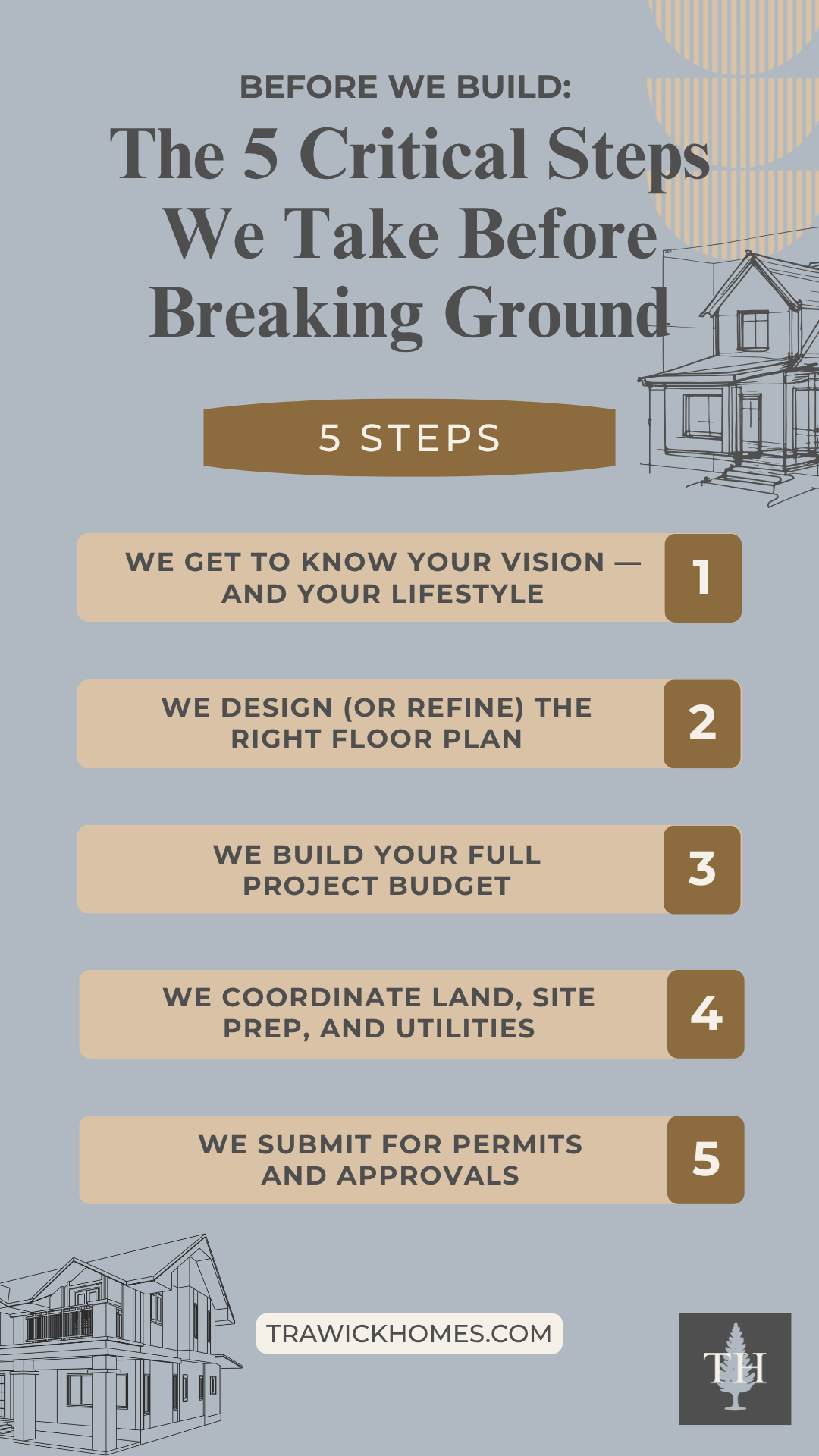
Before we build: The 5 critical steps we take before breaking ground
Step 1: We get to know your vision — and your lifestyle
Every build starts with a conversation, not a contract. Whether you already have ideas saved from Pinterest or you’re starting from scratch, our first goal is to understand how you live and what matters most in your new home.
We’ll ask questions like:
- What does a typical day look like in your current home?
- What’s not working — and what are you trying to make room for?
- Will this be your forever home, or a stepping stone for now?
- Do you want to be closely involved in choices and selections, or prefer a trusted guide leading the way?
This process helps us identify the must-haves, the nice-to-haves, and how to shape your space for the season of life you’re in — so this house actually feels like home from day one.
Step 2: We design (or refine) the right floor plan
Sometimes clients come to us with existing plans in hand. Other times, they bring notebook sketches or inspiration images on their phone. Either way, we can start there — or create something totally new.
We use a combination of:
- Thousands of plan options we can customize
- Your lifestyle needs (see step 1!)
- 3D renderings (optional, but incredibly helpful) to help you see your layout before it’s ever built
We might go through 2–3 iterations, tweaking things like flow, room sizes, or material choices. This is our chance to get it just right on paper, so there are fewer surprises in the field.
🔍 Why this matters: A well-thought-out plan helps us give you an accurate budget, realistic timeline, and smoother build later on.
Step 3: We build your full project budget
Forget rough estimates or wishful thinking. One of the things that sets us apart is how we handle budgeting — because we don’t just give you a price per square foot and hope for the best.
Here’s what we provide during pre-construction:
- A line-by-line breakdown of costs, from foundation to fixtures
- Milestone-based budget reviews, so you stay in control as you select finishes and materials
- Change order tracking that shows your total as it adjusts — so there are no surprises at the closing table
💬 A real example: One couple we worked with decided to finish their basement mid-build. Their price went from $600K to $630K — but they weren’t shocked. They’d seen and signed every change order along the way, and knew where every dollar went.
Proactive budgeting now protects you later — and gives you the freedom to choose what’s worth upgrading before it’s too late.
Step 4: We coordinate land, site prep, and utilities
If you already own land: Great! We’ll assess your site, run surveys if needed, and make sure it’s build-ready.
Looking for land? We can help with that too. Our team often helps clients find the right lot — and spot potential red flags (like grading issues or septic requirements) before they make an offer.
Once a location is secured, we’ll handle:
- Getting a site plan drawn
- Ordering soil tests or surveys, if needed
- Understanding setbacks, easements, and HOA requirements
- Confirming where utilities are coming in (water, sewer, electric, etc.)
🏡 Pro tip: Not all lots are created equal. A “cheaper” piece of land can sometimes cost more once excavation and utility prep are factored in. We help you avoid those hidden costs.
Step 5: We submit for permits and approvals
Once plans are finalized and the site is set, we submit for any required permits — city, county, or HOA.
Permits typically include:
- Building permits
- Electrical/plumbing/mechanical permits
- Septic or sewer system approvals
- Stormwater management, depending on the size of the home and jurisdiction
⏳ Permit timing varies by location — anywhere from 2 to 8 weeks, on average. While we wait, we usually begin ordering materials and lining up trade partners, so we’re ready to go as soon as the green light comes in.
The bottom line: Pre-construction isn’t downtime — it’s go time
When you’re building a custom home, there’s a lot that needs to happen before you can “start.” But it’s not downtime — it’s where the real planning, problem-solving, and decision-making happens.
And with our help?
You won’t be left in the dark, wondering what’s going on. You’ll know exactly:
- Where your plan stands
- When your permits are coming
- How your budget is tracking
- What’s due from you each week, and what we’re handling for you
A smooth build starts here — and we’re with you every step of the way.
Ready to begin the process?
Whether you’ve got a lot already or you’re just thinking about building, we’re happy to chat. Let’s take the uncertainty out of it — and start creating the home that fits your life beautifully.
👉 Contact us here to get started or schedule a no-pressure intro call.
You bring the dream.
We’ll bring the plan.